
Technology
Chip Whitworth: Reliable power drives Tampa Bay’s business community and economy
By Marcus Chen
Advertisement · Why this ad?
Katherine oversees editorial operations across all six brands. Before joining The Meridan Group, she spent 14 years at the Minneapolis Star Tribune, where she led the metro desk through its digital transformation. She holds a Master's in Journalism from Northwestern's Medill School.
More from Katherine →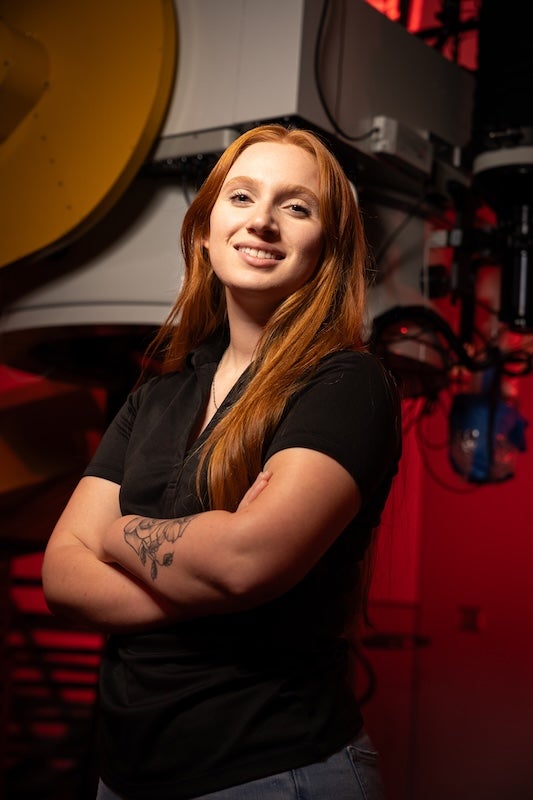
A class project led graduate students Daejhanae Smith and Rhiannon Hicks to contribute data to “Unmasking (44) Nysa: Evidence for a Trilobate Structure,” a study published in the Journal of Astronomy Astrophysics examining one of the solar system’s more unusual asteroids. For their Advanced Observational Astronomy course, Smith and Hicks designed and carried out their own project to study 44 Nysa, a large, bright asteroid located in the main asteroid belt between Mars and Jupiter. By observing 44 Nysa for around eight hours, they collected more than 800 images and produced a light curve, a measurement of an object’s brightness as it rotates. Their observations showed the same distinctive pattern seen in previous studies, with two unequal maximums and minimums in 44 Nysa’s brightness. Researchers later combined their data with high-resolution observations to develop a three-dimensional shape model, a digital blueprint, that revealed evidence that 44 Nysa may have a rare, trilobate sha
By Marcus Chen

By Katherine Langford

By Marcus Chen

By Marcus Chen